INTERVIEW / XP UP / 08 QUESTIONS
The ideas
behind the game.
The beginnings of Kobayakawa-san Is a Soulslike, the possibilities of games as a medium, and connecting with players around the world. All eight questions and original English responses.
 HOKUTO × XP UP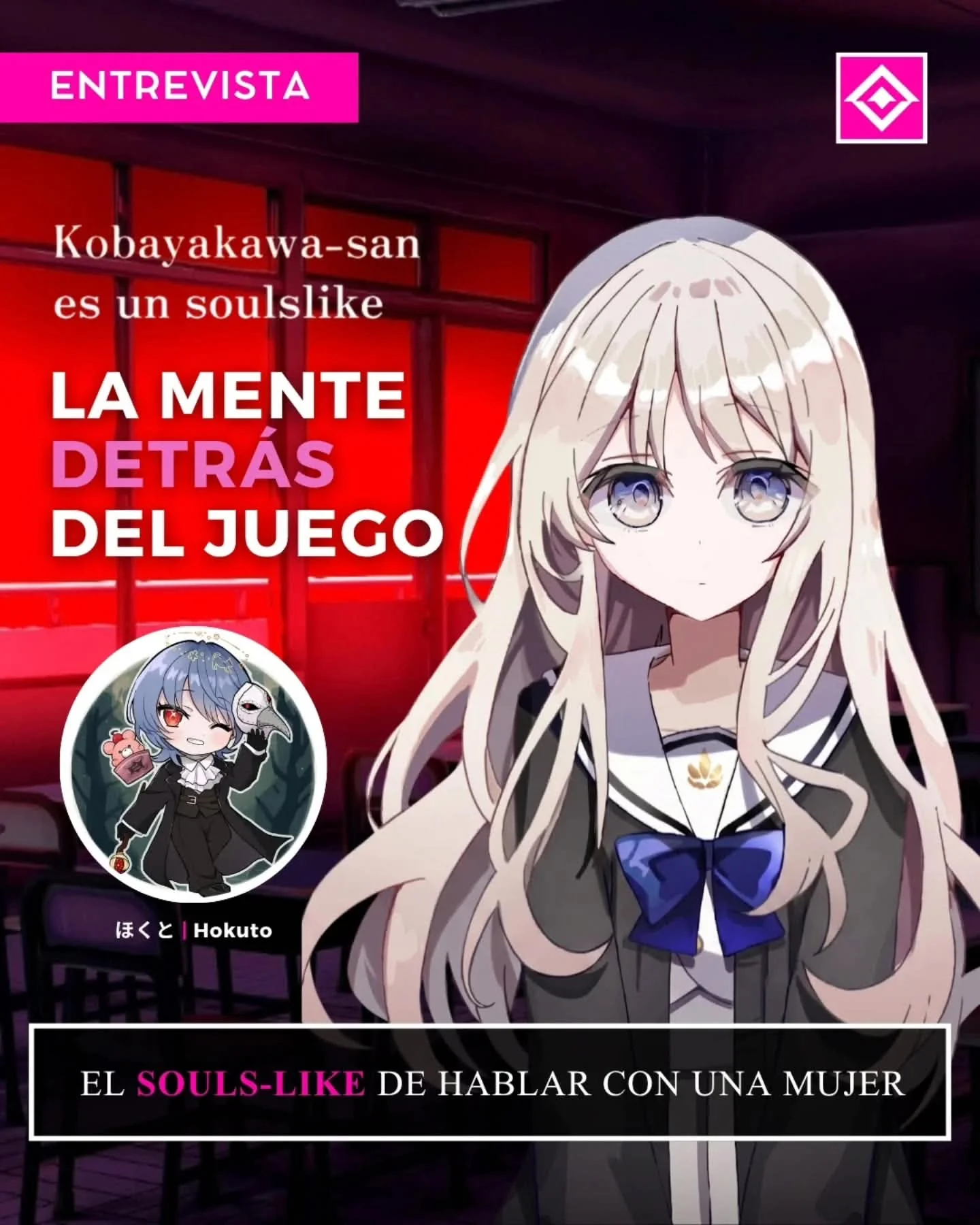
01 / Question
Could you tell us a little bit about yourself and your motivation for creating video games?
Hokuto
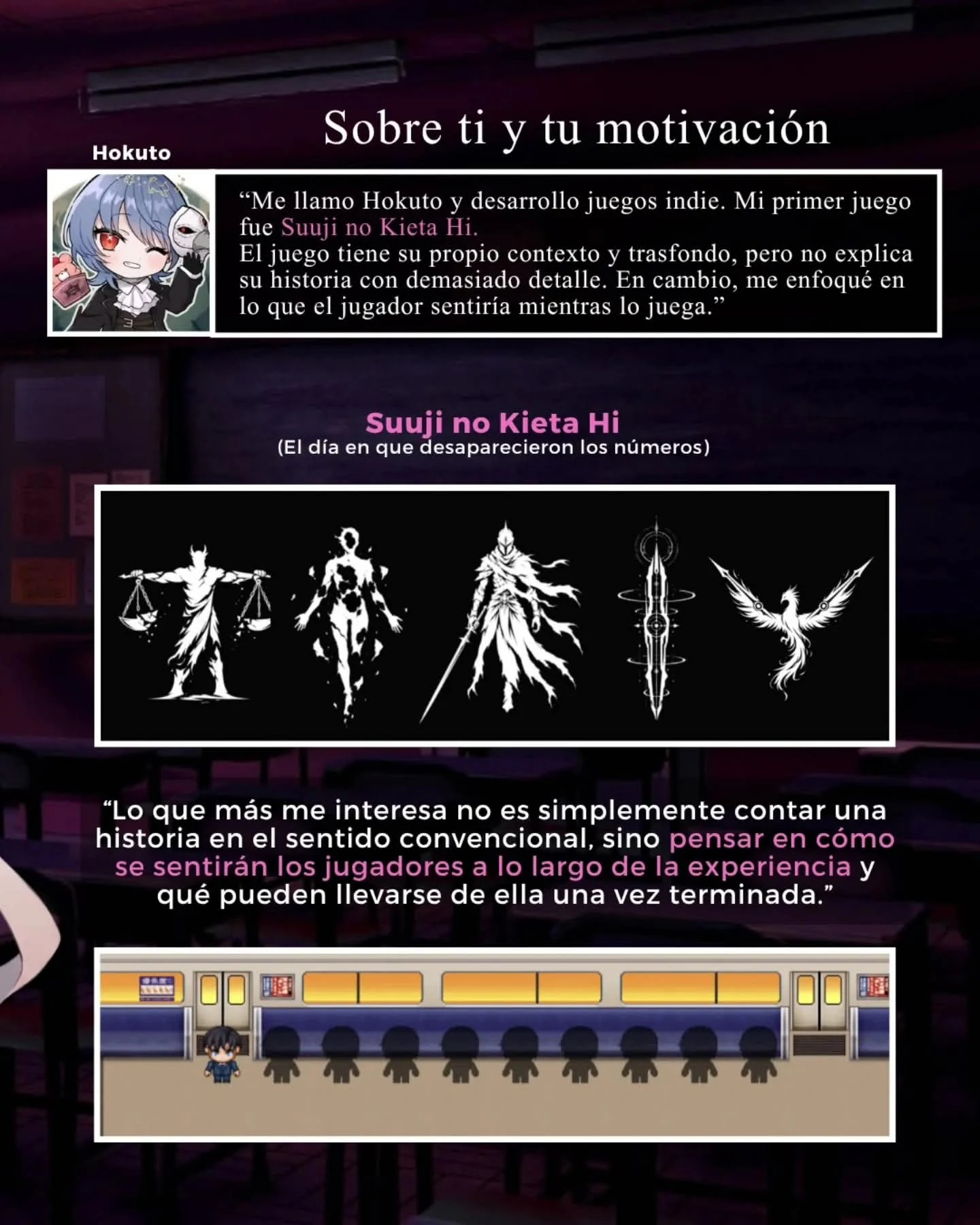
My name is Hokuto, and I make indie games. My first game was Suuji no Kieta Hi (roughly, “The Day the Numbers Disappeared”), a short RPG set in a world where numbers have disappeared and the player has to rely on their senses to fight.
What interests me most when creating something is not simply telling a story in the conventional sense, but thinking about how the player’s emotions change through the experience and what they take away from it afterward.
Suuji no Kieta Hi has its own setting and background, but it does not explain its story in much detail. Instead, I focused on what the player might feel while actually going through the game.
Games are especially interesting to me because not only visuals and dialogue, but also the UI, game systems, and even the player’s own actions can become part of the expression. Thinking about experiences that can only exist because the player actively participates, and then turning those ideas into something playable, is one of my biggest motivations for making games.
02 / Question
The concept of Kobayakawa-san wa soulslike is quite unique, combining two very different genres. How did you come up with the idea for the game?
Hokuto
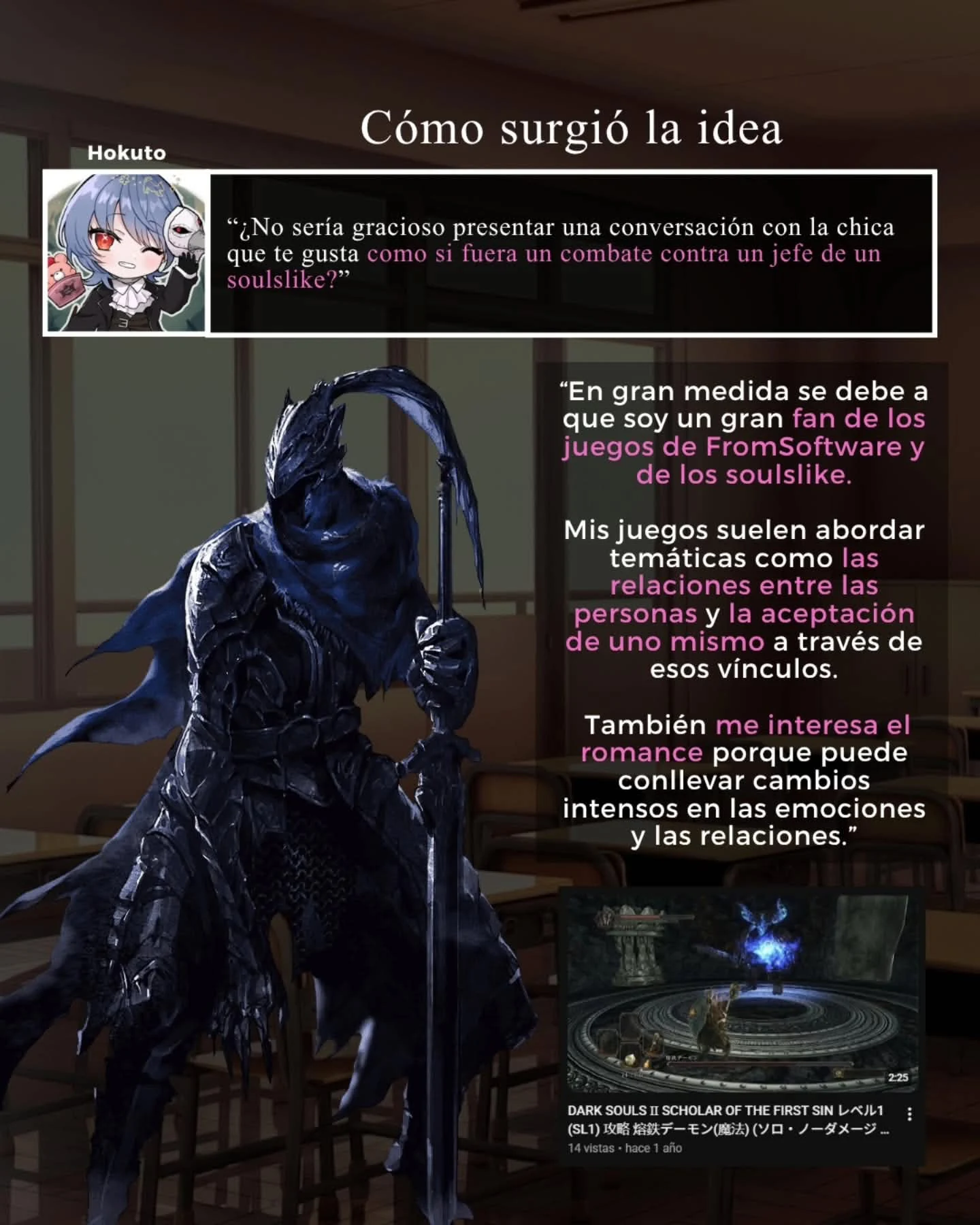
A big part of it is that I’ve been a huge fan of FromSoftware games and Soulslikes for a long time.
I’ve completed the Dark Souls trilogy and ELDEN RING, including their DLC, at level 1, solo and using melee combat. I’ve also done things like defeating bosses without taking damage, so I’ve spent a lot of time with this genre.
The actual beginning of Kobayakawa-san was much simpler. I had the thought, “Wouldn’t it be funny if talking to the girl you like was presented as a Soulslike boss fight?” That was where I started.
My games often deal with relationships between people, and with things like self-acceptance through those relationships. I’m also interested in romance because it can involve strong changes in emotions and relationships. But I wasn’t thinking about all of that theoretically when I first started making this game.
It began as a small idea, and while developing it I discovered that a dating adventure game and a Soulslike fit together much better than I had expected.
03 / Question
Are you planning to publish your game on other platforms?
Hokuto
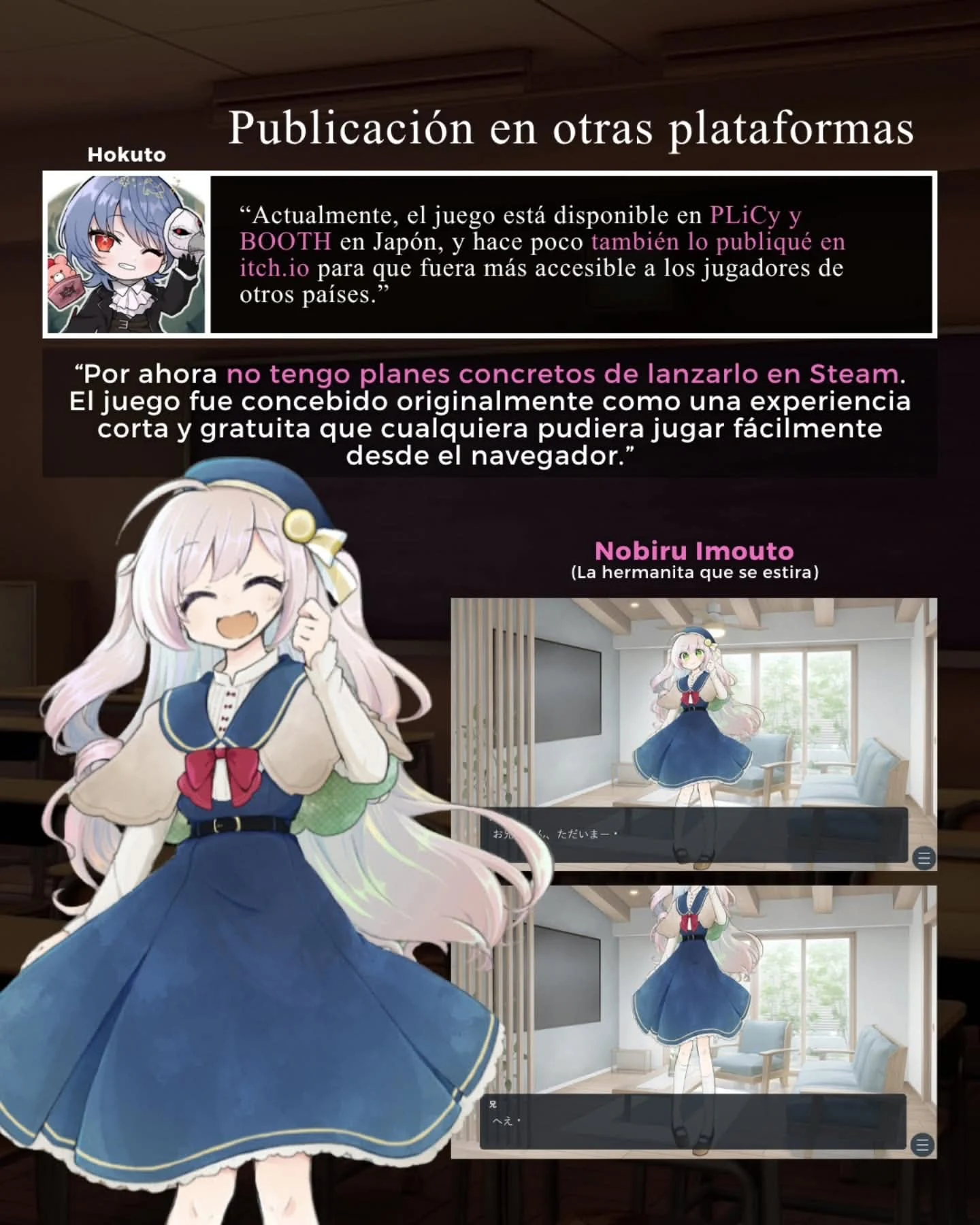
The game is currently available on PLiCy and BOOTH in Japan, and I recently released it on itch.io as well to make it easier for international players to access. On itch.io, both the browser version and the Windows download are available.
I don’t currently have any specific plans for a Steam release. The game was originally designed as a short, free game that people could immediately play in their browser.
That said, I’m not completely ruling out any possibilities for the future.
04 / Question
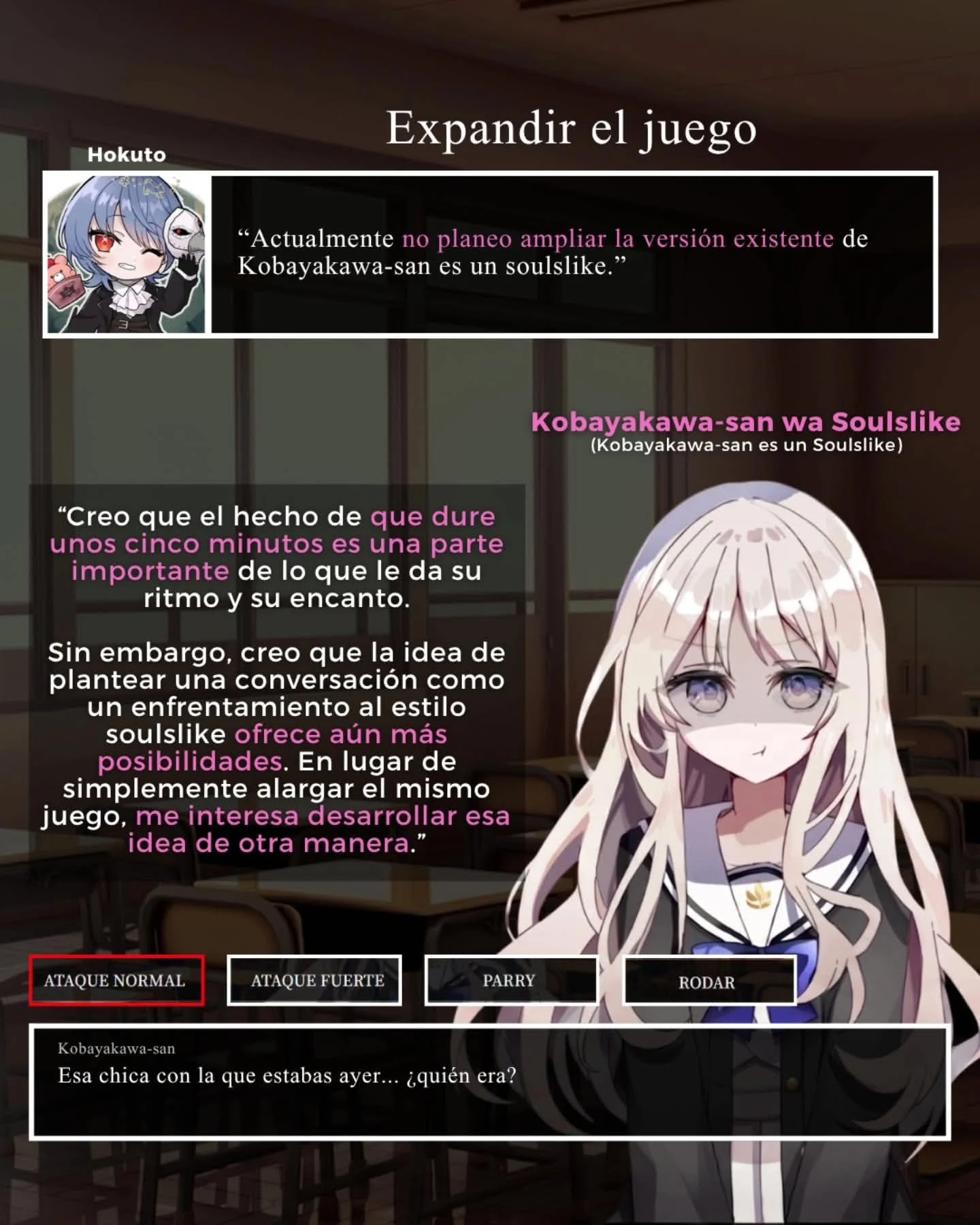
Do you plan on expanding the game's content?
Hokuto
I currently have no plans to turn the existing Kobayakawa-san Is a Soulslike into a longer game.
I think its roughly five-minute length is an important part of what gives the game its pacing and appeal.
However, I do think there are still other possibilities in the idea of approaching a conversation like a Soulslike encounter. Rather than simply making the same game longer, I’m interested in developing that idea in a different way.
05 / Question
How has the overall reception of this project been? What can you tell us about the reception from the Spanish-speaking audience?
Hokuto
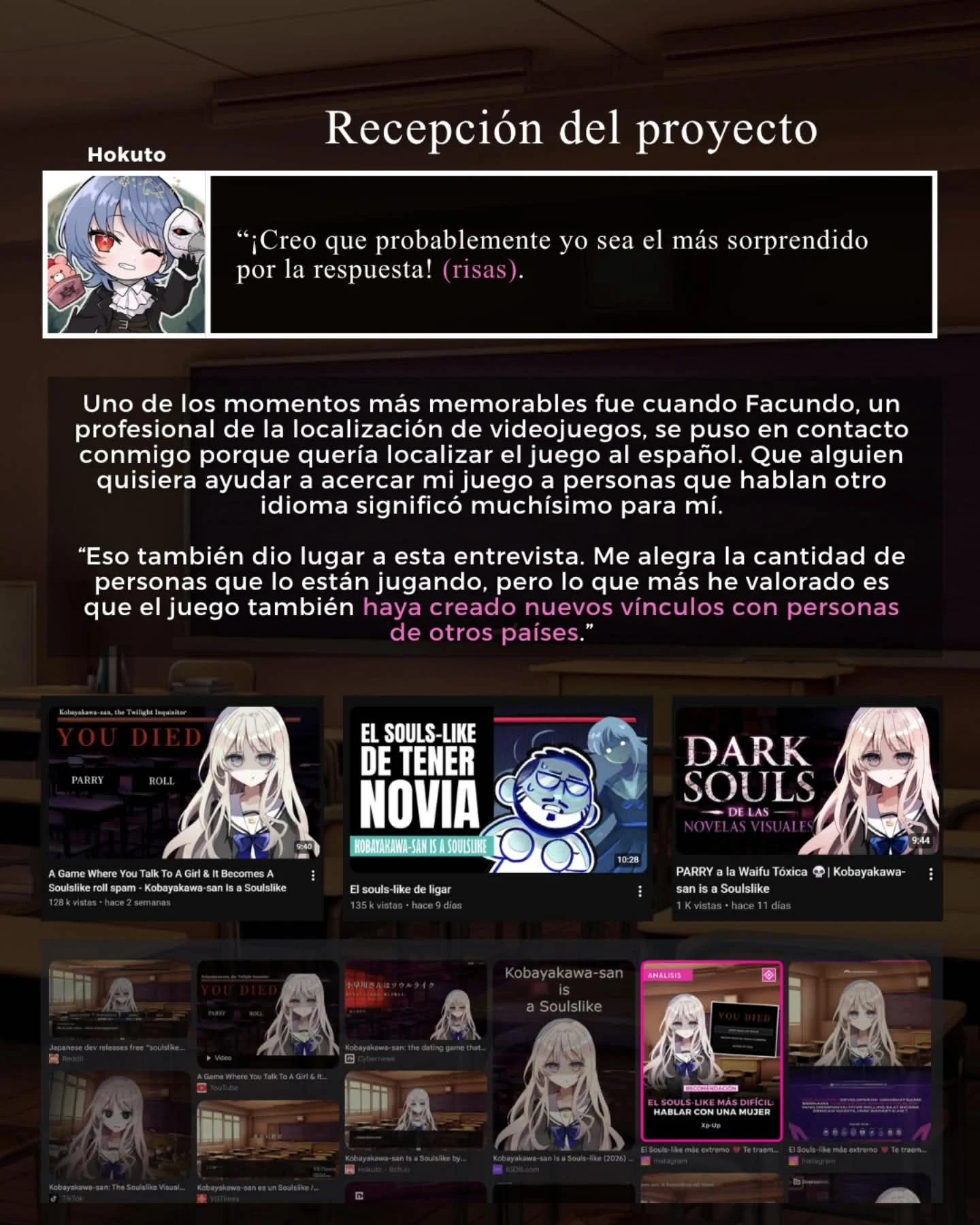
I think I’m probably the person who is most surprised by the response! (laughs)
Within about two weeks of release, the game received more than 80,000 plays on PLiCy and reached #7 in the platform’s all-time ADV play count ranking. The Windows version on BOOTH has also been downloaded more than 10,000 times.
When Japanese gaming media first started writing about the game, I already felt that something much bigger than I had expected was happening. Then it began spreading through overseas media and streamers as well, and it started to feel even more surreal.
One of the most memorable moments was when Facundo, a professional game localizer who discovered the game through its overseas spread, contacted me himself and said that he wanted to localize it into Spanish. The fact that someone wanted to help bring my game to people who speak another language was incredibly meaningful to me.
And now, that Spanish localization has also led to this interview with XP UP. Of course I’m happy about the number of people playing the game, but one of the things I’ve appreciated most is that the game has also created new connections with people in other countries.
06 / Question
We’ve seen your two previous projects, and there’s even a reference to them in Kobayakawa-san wa soulslike. Are you interested in localizing them so more people can enjoy them?
Hokuto
Yes, I would.
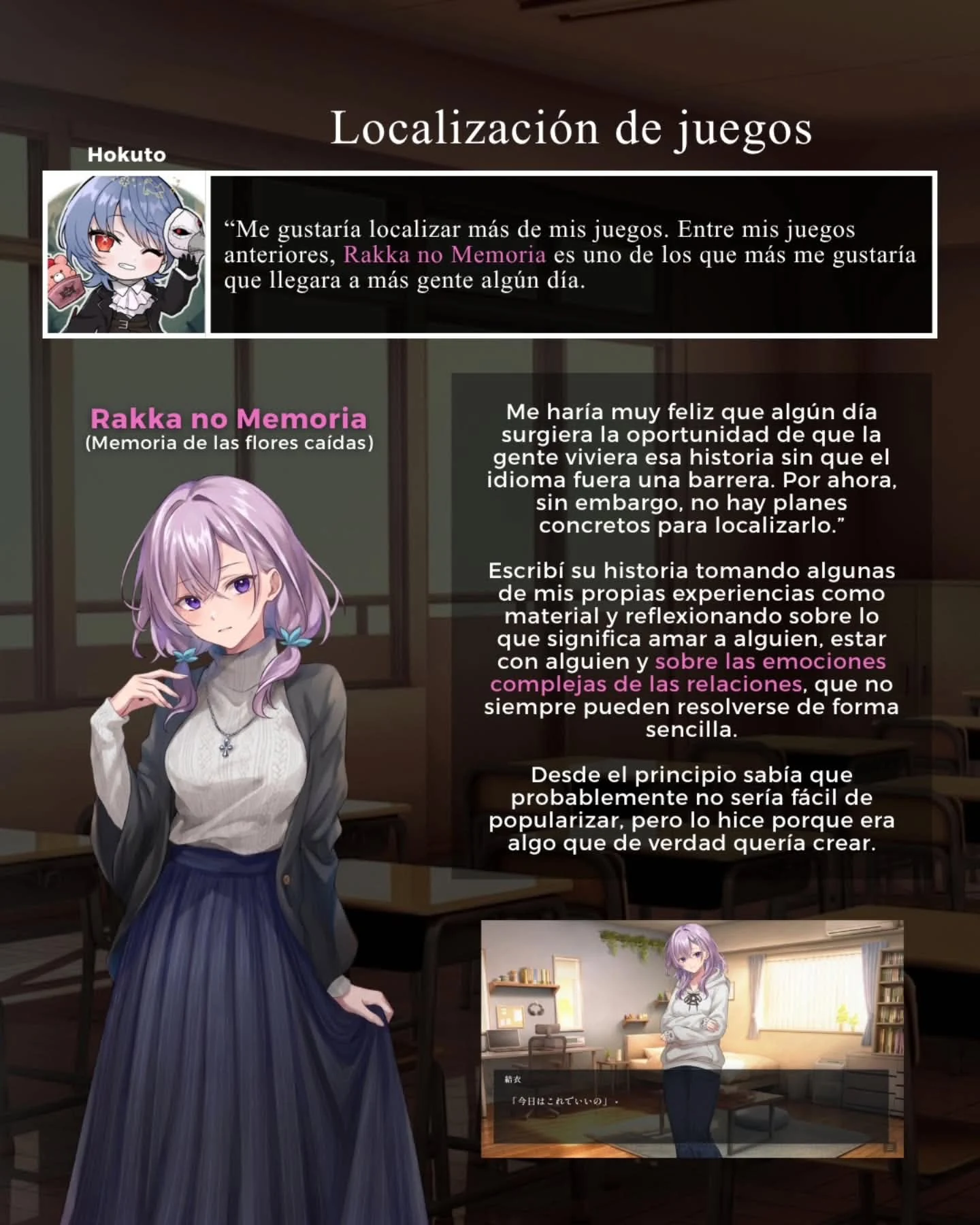
Among my previous games, Rakka no Memoria (roughly, “Memoria of Fallen Blossoms”) is one that I especially hope can reach more people someday.
I wrote its story very seriously, using some of my own experiences as material while thinking about what it means to love someone, to be together with someone, and the complicated emotions in relationships that cannot always be neatly resolved.
Unlike Kobayakawa-san, it wasn’t designed around an obvious hook, and it isn’t simply a cheerful story either. I knew from the beginning that it probably wouldn’t be the easiest kind of game to make popular, but I made it because it was something I genuinely wanted to create.
So I would be very happy if there were an opportunity for people to experience that story across language barriers someday. However, there are no concrete localization plans for it at the moment.
07 / Question
Do you have any other projects in mind or currently in production? Are you considering continuing with localization for your future projects?
Hokuto
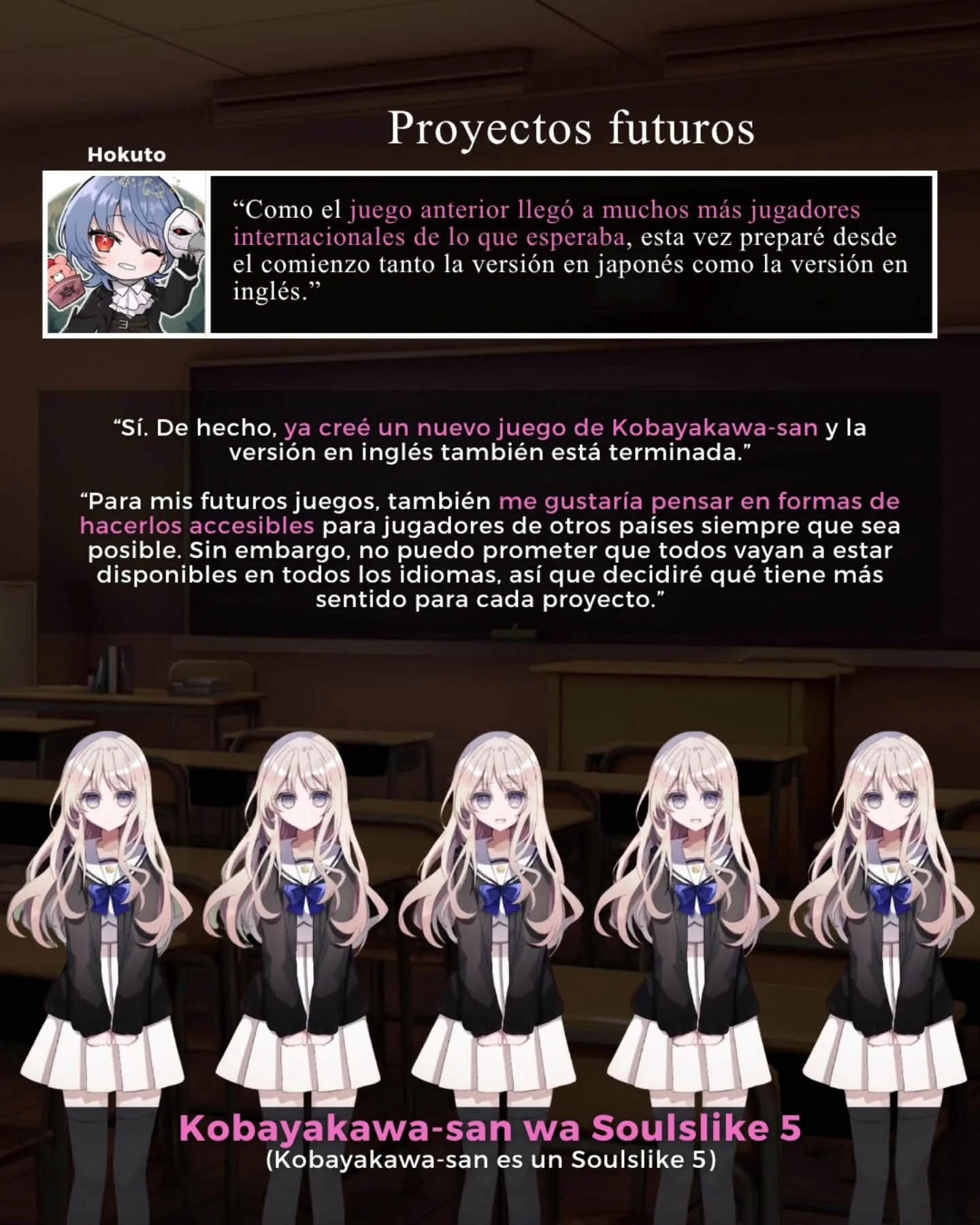
Yes. In fact, I’ve already made a new Kobayakawa-san game, and the English version is now finished as well.
I’m planning to officially announce it later this week.
Since the previous game reached far more international players than I expected, this time I prepared both Japanese and English versions from the beginning.
For future games, I’d also like to keep thinking about ways to make them accessible to players outside Japan whenever possible. However, I can’t promise that every game will be localized into every language, so I think I’ll decide what makes sense for each individual project.
08 / Question
Is there anything you'd like to say to the people who have played Kobayakawa-san wa soulslike?
Hokuto
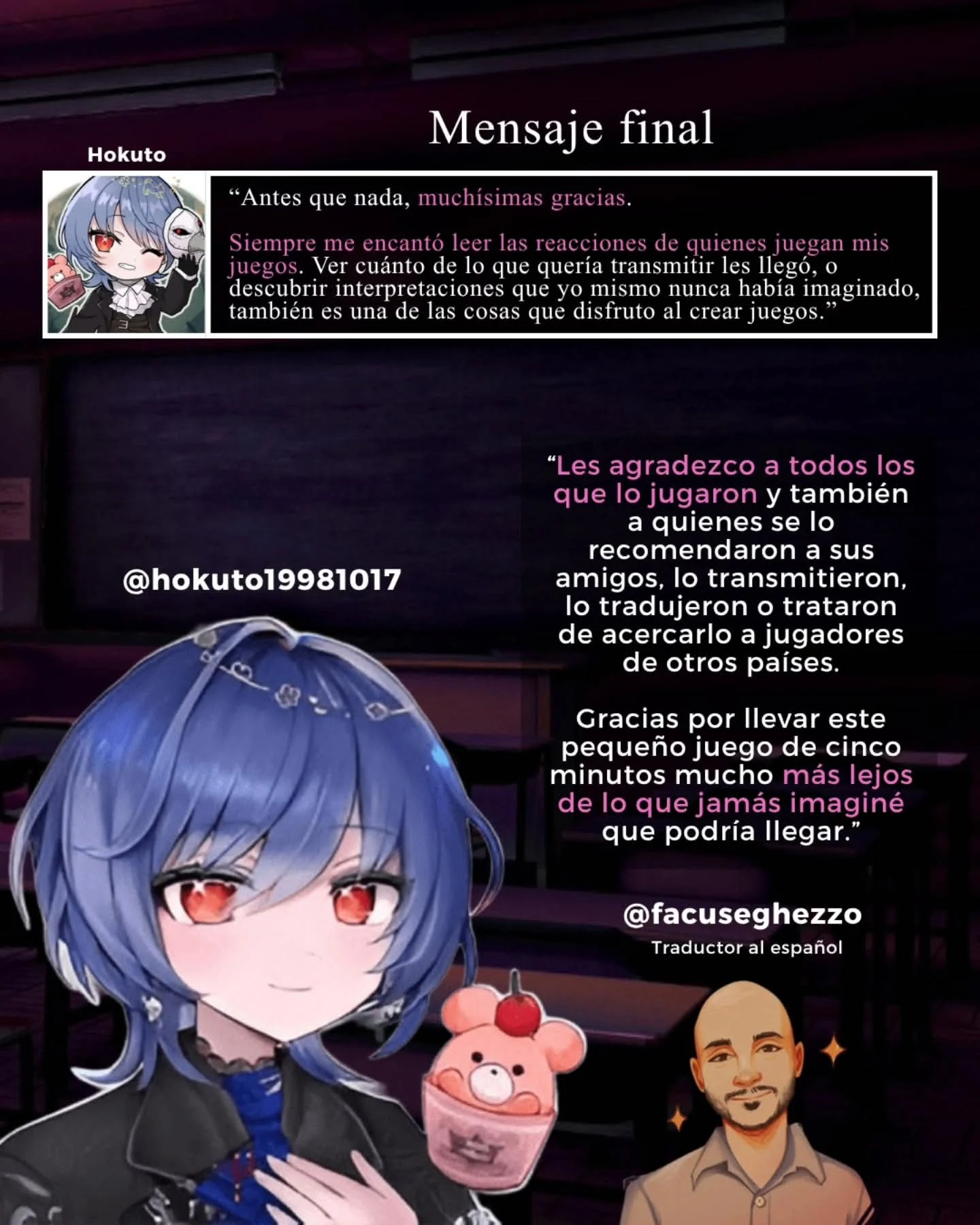
First of all, thank you so much.
I’ve always loved reading reactions from people who play my games. Seeing how much of what I intended reached them, or discovering interpretations that I had never imagined myself, is also one of the things I enjoy about making games.
But with this game, I’ve received so many comments, videos, and streams that it has become impossible for me to keep up with all of them by myself.
I’m grateful not only to everyone who played it, but also to the people who recommended it to their friends, streamed it, translated it, or tried to bring it to players in other countries.
Thank you for carrying this little five-minute game so much farther than I ever imagined it could go.
PUBLISHED EDITION / ESPAÑOL
Published Spanish edition
View XP UP’s nine-page Spanish-language Instagram edition. Its edited excerpts differ from the full English Q&A manuscript shown here.